Next Day Delivery on 1000s of products

Power Saws

A power saw is a power tool with a motorised blade that enables the operator to cut through a wide range of materials with ease, such as wood, metal and plastic.

Power saws speed up the cutting process, improve efficiency and accuracy, and reduce the physical effort associated with manual cutting tools.

They are widely used by joiners, carpenters, plumbers and many other tradespeople for high-volume cutting tasks, or for cutting thick and tough materials, as well as by DIYers for cutting jobs around the home.

Frequently Asked Questions about Power Saws

Can power saws cut through metal?

Yes, many power saws can cut through metal, such as aluminium, mild steel, stainless steel and cast iron, but only when the correct saw and blade are used. Not every power saw is suitable for metal cutting, and using the wrong blade can damage the tool, ruin the material or create a safety risk.

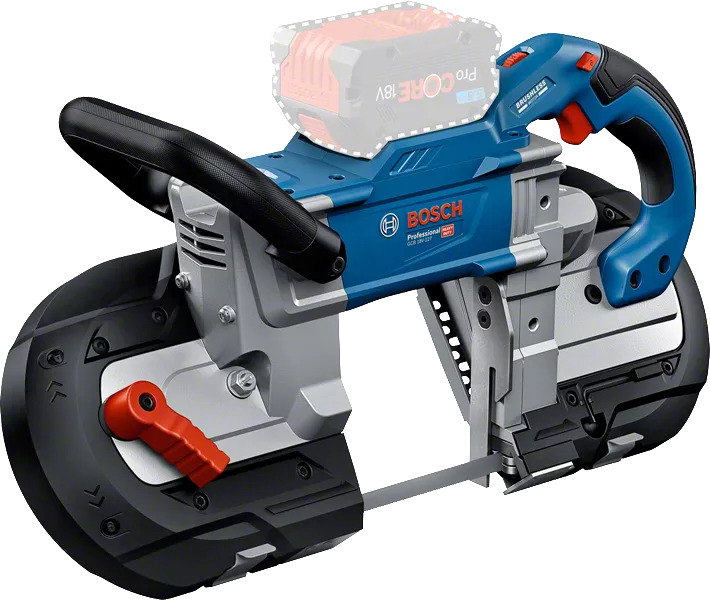
For thicker or stronger metals, such as cast iron or stainless steel, a metal-cutting bandsaw, chop saw, reciprocating saw or power hacksaw may be suitable, depending on the material, type of cut required and access to the material. For example, a reciprocating saw may be more suitable for overhead cuts or cuts in restricted spaces, while a chop saw may be more suitable for fast, straight and repeatable cuts.

For thinner or softer metals, such as aluminium sheet, more saw options may be available. If a straight cut is required, a chop saw may be suitable, as its circular blade or cutting disc pivots down from a frame to make fast, straight cross cuts, typically at 90 degrees. If the cut needs to be curved or shaped, a jigsaw may be suitable, using a narrow, straight blade that moves rapidly up and down to make controlled cuts and cut-outs.

Always ensure that the cutting blade and tool being used are suitable for the material and application.

What maintenance is required for power saws?

After use, remove dust, chips and debris from the saw body, blade guard, vents, base plate and any moving parts. This is because built-up dust can affect performance, visibility and tool cooling, which is especially important if the tool is used for longer periods, as overheating can potentially damage the internal motor.

Inspect the cutting blade regularly for dull teeth, cracks, warping, missing tips or any heavy build-up of resin or debris. If the blade has become dull or damaged, it should be replaced because it can cause poor cuts, overheating, burning, vibration or kickback.

If the power saw has adjustable depth, bevel or mitre settings, make sure these lock securely and remain accurate.

Operators should also check that blade guards, switches, clamps, fences and adjustment locks operate correctly before use, so that safety is not compromised.

Is a circular saw suitable for DIY home projects?

Yes, a circular saw is suitable for many DIY home projects, especially when making fast, straight cuts through timber or sheet materials such as plywood, MDF and chipboard, or when cutting decking, fence panels, flooring, shelving, worktops or framing timber.

A circular saw is useful for DIY because it is portable, relatively easy to set up and can cut larger boards that may be difficult to handle with a table saw or hand saw.

However, a circular saw is best for straight cuts, not curved or detailed cutting. If the operator is looking to create shaped cuts, internal cut-outs or tight curves, a jigsaw may be more suitable.

It may be worth considering a cordless circular saw if the DIY work is being carried out away from a power source. It is also recommended to carry a spare battery to minimise downtime when the current battery runs out of power.

Can power saws be used for angled or bevel cuts?

Yes, some power saws can be used for angled or bevel cuts, depending on the type of saw and its adjustment features. A mitre cut is made at an angle across the face of the material, while a bevel cut is made at an angle through the thickness of the material, rather than as a straight 90-degree cut.

A mitre saw is one of the best options for angled cuts because it is designed to make accurate mitre cuts across materials such as timber, trim, moulding and framing materials. Many models can also make bevel cuts by tilting the saw head, while compound mitre saws can make both mitre and bevel cuts.

Circular saws are also capable of making bevel cuts, as long as the tool has an adjustable base plate or shoe, allowing the blade to tilt, often up to around 45 degrees, making it useful for angled cuts in boards, panels and sheet materials.

A jigsaw can make bevel cuts too, as long as it has a tilting base plate. However, jigsaws are better suited to shaped, curved or lighter-duty cuts rather than long, highly accurate angled cuts.

What blade do I need for wood, metal, plastic or masonry?

The blade used depends on the material being cut and the power saw being used.

  • For wood, use a blade with larger teeth for fast cuts, or a blade with smaller teeth that are closer together for finer cuts. An example is this jigsaw blade from Bosch. Many blades for cutting wood are made from high-carbon steel (HCS).
  • For metal, use an HSS, bi-metal or TCT metal-cutting blade, or a specialist abrasive or metal-cutting disc, depending on the saw. Mild steel, stainless steel, aluminium, pipe, tube and sheet metal may all require different blade types, so use the correct cutting speed and steady control. Examples include these circular saw blades that can cut through stainless steel, as well as this multi-tool blade from Fein that can cut through mild steel.
  • For plastic, use a fine-toothed blade that is designed to reduce chipping, cracking or melting. Cutting through plastic too quickly can generate heat that may melt it, so cut slowly and with control. An example is this jigsaw blade from Bosch.
  • For masonry materials, such as concrete, stone and tiles, use a masonry-rated blade, abrasive disc or diamond blade, depending on the tool and material. An example is this reciprocating saw blade from Bosch, which can cut through brick, as well as this power hacksaw blade from Fein that can cut porous concrete.

Most Popular Power Saws

Guides and Advice About Power Saws

A Complete Health and Safety Guide to Hand-Arm Vibration Syndrome
How can you protect yourself from Hand-Arm Vibration Syndrome? Find out the early symptoms of HAVS and the steps employers should take to protect staff.
Read more