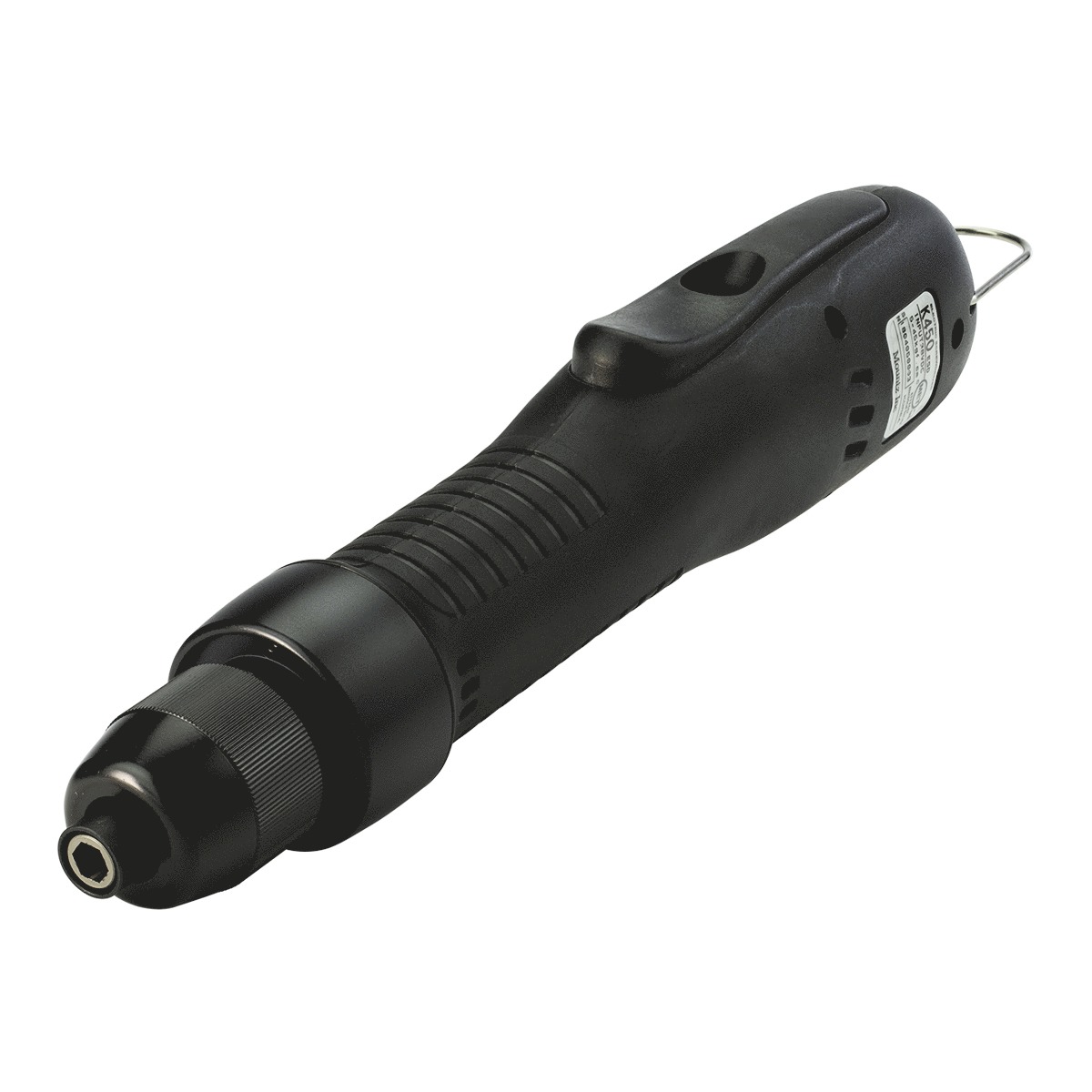
Torque Screwdrivers
A torque screwdriver is a precision torque tool that uses a screwdriver bit to apply a set level of torque to screws and other smaller fasteners.
Torque screwdrivers ensure that the operator tightens screws and other small fasteners to manufacturers specifications. This avoids screws being overtightened, which can cause damage to the screw or panel the screw is being tigtened to, or undertightened, which can cause safety hazards because the screw isn't tight enough and may become loose. When the desired level of torque is applied to the screw, the torque screwdriver will usually slip, click or alert the operator digitally with a beeping noise, LED light or vibration.
Torque screwdrivers enable precision torque control for the operator and are crucial tools where quality control and compliance are required, which is why they are used in industries such as medical device manufacturing and maintenance, aerospace, automotive, as well as electronics manufacturing, and datacentre construction and maintenance.
What are the differences between manual, electric and pneumatic torque screwdrivers?
All of these torque screwdriver types apply torque to screws and other small fasteners, with the main difference being the way they apply torque and the speed they can apply torque.
- Manual torque screwdrivers are user-powered, with torque being applied from the operators effort. Manual torque screwdrivers are available as a preset torque screwdriver or as an adjustable torque screwdriver and are used for low volume work that requires high levels of precision.
- Electric torque screwdrivers are ideal for high-volume fastening tasks at speed, such as when being used on a production line. The torque level is set by the operator and when that torque level is reached, the torque screwdriver stops applying anymore torque. Some electric torque screwdrivers are able to store fastening data, so that it can then be sent to a PC for evaluation or record keeping.
- Pneumatic torque screwdrivers deliver higher torque and are powered by compressed air. They are lightweight, can be used continuously and are ideal for high volume work but offer less precision than electric torque screwdrivers.
How do I select the appropriate torque screwdriver for my needs?
When choosing a torque screwdriver, the operator should consider the following -
- What torque range is required? The manufacturer will likely state the torque that needs to be applied for the application, as well as the torque measurement type, (Nm, ft-lb, or in-lb). The torque screwdriver used should have a working range which puts the target torque in the middle of the scale, and ideally it shouldn't exceed 80% capacity of the torque screwdriver, which minimises strain on the torque mechanism in the tool, and will likely make it more accurate. So for example, if the job at hand needs 10Nm, a 2–20Nm torque screwdriver is better than a 20–200Nm, because accuracy is usually worse at the lower end, but the torque required isn't high enough to strain the mechanism.
- How often will it be used? Pnuematic torque screwdrivers can be used continuously but require compressed air to function. Electric torque screwdrivers can also be used for longer periods of time, but are heavier due to the mechanism in them and need to be powered by an electrical supply. Manual torque screwdrivers are highly portable and accurate, but don't deliver high levels of torque and cause repetitive strain injuries if used for high volume work over longer periods of time.
- Are there any accuracy and standards that need to be met? Some torque work requires that tooling meets certain standards, such as ISO (such as ISO 6789-1:2017), ASME (such as ASME B107.300-2010), ESD (such as IEC 61340-5-1) and VDE (such as IEC 60900) standards. Tooling should always be checked to ensure it meets the required standards and accuracy required before use.
Can a torque screwdriver be used to tighten all screws?
Torque screwdrivers can tighten a screw as long as the screw head matches the screwdriver bit in the torque screwdriver, but if a screw needs more torque applying to it than what the torque screwdriver can safely deliver, then a different torque screwdriver or solution is required.
Why is it important to calibrate a torque screwdriver?
Torque screwdrivers should deliver repeatable torque, to ensure safe and reliable fastening. Over time, internal components can wear, springs can relax and mechanisms can drift, which will cause the applied torque to deviate from the set value.
Calibrating a torque screwdriver ensures that it doesn't overtighten a screw, which can damage the screw and the panel it is being fastened to, or undertighten a screw, which can lead to loose screws, poor electrical connections or even mechanical failure.
Torque screwdrivers should be calibrated annually or after a specific number of uses, as recommended by the manufacturer, to ensure they meet quality control thresholds and compliance targets.
Are torque screwdrivers suitable for electronics or delicate assemblies?
Electronics and delicate assemblies, like on medical devices and optical equipment, generally use small screws that are tightened into fragile or brittle materials like plastic and aluminium, where overtightening will crack or damage them. By using a torque screwdriver (and in particular a manual torque screwdriver) to apply torque and tighten screws to an exact and repeatable value, which is often in the centinewton-metre range, ensures the chances of damage is minimised.
What bit types are compatible with torque screwdrivers?
Torque screwdrivers typically accept standard 1/4" hex drive screwdriver bits, including Phillips (PH), slotted, Torx (T), Pozidriv (PZ) and hex.
The screwdriver bit should always match the screw head for optimal grip and torque transfer, and to also prevent cam-out, which can strip the screw head. In addition always ensure that the bit can handle the amount of torque that is going to be put through it for the fastening job.
How should I store my torque screwdriver?
When the torque screwdriver has been finished with being used, the screwdriver bit should be removed and the torque screwdriver then stored in a clean and dry environment, on its lowest torque setting to relieve any tension in the mechanism and help maintain its calibration.
Ideally it should be stored in a protective case, shielding it from any potential impact, as well as any dust and debris which could infiltrate the mechanism and affect performance.
What happens if I exceed the torque setting on a torque screwdriver?
Exceeding the torque setting can damage both the screwdriver and the screw.
For screws that have exceeded their specified torque, their clamp load will increase beyond what the joint was designed for. This will lead to stripped threads (common in aluminum or small screws), stretch the fastener and reduce its long-term holding ability, and even potentially snap the fastener.
If the maximum torque is exceeded on a torque screwdriver, then the internal mechanism will drift out of calibration, it might slip at the wrong torque and the tool may even fail, which will lead to innacurate torque application in all instances.
The damage to the torque screwdriver might not be immediately obvious when the maximum torque has been exceeded, so always ensure it is re-calibrated everytime the torque setting is exceeded, before using it again.
Can I use extensions or longer screwdriver bits without affecting accuracy?
Yes, extensions and longer screwdriver bits can be used but it is generally recommended to use shorts bits where possible. As long as the bit is straight, inline with tool and operating within the torque screwdriver’s normal torque range then it should be OK, however if the screwdriver bit is offset, then it will affect the applied torque to the fastener. This calculator helps to calculate the right amount of torque to apply, if the bit or extension is offset to the torque screwdriver, however we always recommend fastening screws inline to the screwdriver.
Flexible extensions should always be avoided because they will twist under load and not apply the set amount of torque the operator desires. The same rule applies if straight extensions are stacked on top of each other, which can sometimes be the case if the operator is trying to get to a hard to reach fastener.
Can a torque screwdriver be used to unfasten a screw?
Technically, yes, a torque screwdriver can be used to unfasten a screw, however we would never recommend it and instead would recommend using a standard screwdriver. This is because most screws require a higher torque value to break loose than they do to tighten, because of static friction, as well as other factors, such as corrosion and breaking thread sealants. Because of this, it is not uncommon for the breaking torque to be higher than the limit of torque the torque screwdriver can provide, and so, breaking loose the screw could affect the calibration of the torque screwdriver and potentially damage the mechanism, which would affect its accuracy when tightening screws in the future.
Most Popular Torque Screwdrivers
-

1228501
Gedore TLS 1360 FH 1/4" Hex Drive Preset Torque Screwdriver 2.5Nm - 136Nm (Blue Cap)£151.21 £126.01 -

076562
Mountz 076562 FG-20i 1/4" Hex Drive Preset Torque Screwdriver with Gold Label 22cNm - 226cNm£159.55 £132.96 -

076722
Mountz 076722 FGA-40 1/4" Hex Drive Adjustable Torque Screwdriver 0.45Nm - 4.5Nm£490.12 £408.43 -

51060003
Stahlwille 51060003 1/4" Hex Drive Torsiomax Adjustable Torque Screwdriver 2cNm - 30cNm£302.26 £251.88 -

076548
Mountz 076548 FG-40i 1/4" Hex Drive Preset Torque Screwdriver with Blue Label 0.4Nm - 4.5Nm£171.02 £142.52 -

2306549
Gedore Minor FH 1/4" Hex Drive Preset Torque Screwdriver 14cNm - 135cNm (Green Cap)£180.79 £150.66 -

2345056
Gedore Standard FH 1/4" Hex Drive Preset Torque Screwdriver 50cNm - 400cNm (Red Cap)£172.20 £143.50 -

076546
Mountz 076546 FG-8i 1/4" Hex Drive Preset Torque Screwdriver with Blue Label 9cNm - 90cNm£159.55 £132.96 -

076721
Mountz 076721 FGA-20 1/4" Hex Drive Adjustable Torque Screwdriver 22cNm - 226cNm£458.83 £382.36 -

1471481
Gedore TLS 0022 1/4" Hex Drive Micro FH Preset Torque Screwdriver 4cNm - 22cNm£212.46 £177.05