Next Day Delivery on 1000s of products

Safe-T-Cable

Safe-T-Cable tools, cables and accessories are all designed to work together to prevent the loosening of bolts, nuts and various fasteners in demanding environments, with the tool tensioning the pre-formed stainless cable to a controlled force, and then crimping and cutting it in one action.

Safe-T-Cable is essentially a mechanical locking system, which is used in environments where there is excessive heat and vibration, such as in the aerospace sector for securing aircraft fasteners, and also in motorsport for use on brake and engine components.

Safe-T-Cable is a modern replacement to traditional twisted safety wire, with it being quicker and more repeatable to execute, whilst providing a consistent and calibrated tension.

Frequently Asked Questions about Safe-T-Cable

How do Safe-T-Cable tools differ from traditional safety wire tools?

Safe-T-Cable tools simplify installation by using pre-measured cable lengths, eliminating the need for twisting wires. This results in a faster, more uniform process compared to traditional twisting pliers, which require the operator to tension depending on feel and means that results can vary in tightness and twist quality. In comparison, Safe-T-Cable tools apply controlled, repeatable tension and also crimp the ferrule, as well as cutting any excess cable.

What are Safe-T-Cable tools used for?

Safe-T-Cable tools are designed to install Safe-T-Cable systems, which secure fasteners and prevent them from loosening through vibration, thermal cycling or movement, in safety critical sectors like aerospace and automotive industries.

Some examples of where Safe-T-Cable is typically used is -

  • Aircraft fasteners
  • Engine and transmission components
  • Brake system fittings
  • Oil and fuel line fittings
  • Motorsport suspension

What are the key components of a Safe-T-Cable system?

A Safe-T-Cable system includes a cable, ferrule and an installation tool. These parts work together to secure fasteners effectively, ensuring they remain tight under vibration and stress. We have detailed below exactly what tools are required -

  1. Safe-T-Cable, which is made from 321 corrosion resistant stainless steel (AS3510), Iconel 600 (AS3509) or Inconel 625 (AS3655) and is pre-cut to lengths of 12", 18", 21" and 24". This multi-strand cable typically has an attached end fitting and is available in diameters of .022", .032", .040" and .062", which ensures it can be used across many different applications.
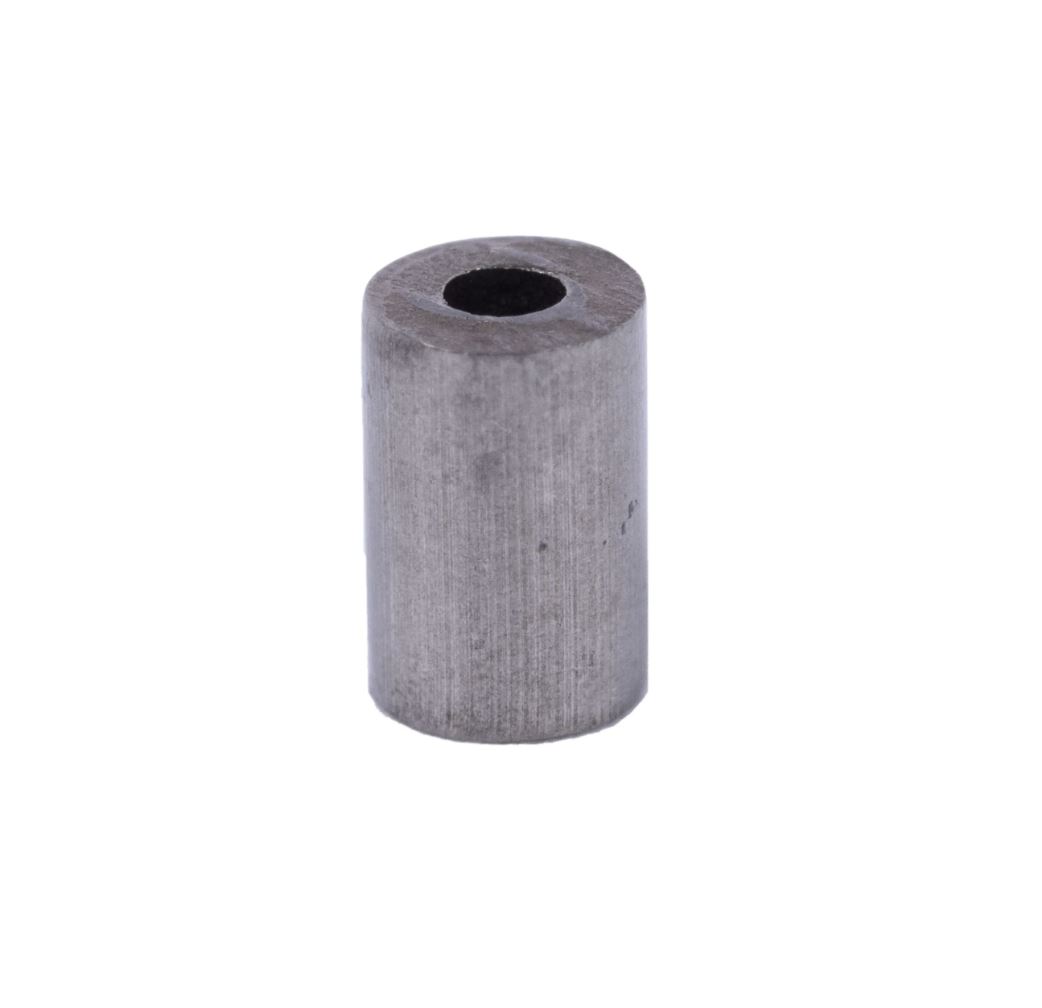
  2. Ferrule, which is a small metal sleeve that locks to the cable once tensioned by being crimped, to permanently secure the cable loop around the fastener.
  3. Installation tool, that tensions the cable to a calibrated force, crimps the ferrule and then trims any excess cable in one controlled cycle. The maximum allowable length of cable extending beyond the ferrule is .031"/0.79 mm.

How do I choose the right Safe-T-Cable tool for my needs?

Selecting the correct Safe-T-Cable tooling depends on several factors, such as -

  1. Cable diameter. Safe-T-Cable is available in diameters of .022”/0.56mm, .032”/0.81mm, .040”/1.02mm and .062”/1.57mm, so the operator must ensure that the tool can accomodate the diameter of Safe-T-Cable required.
  2. Access area. Safe-T-Cable tools are available with noses of different lengths at 3", 5", 7" and 9". Noses are available in different lengths so that Safe-T-Cable can be applied to fasteners are different depths, or where access is restricted.
  3. Power type. Should the Safe-T-Cable tool be powered or manual? Powered tools include hydraulic, cordless and pneumatic and all are ideal when Safe-T-Cable is being applied for long periods of time, as they take a lot of the manual work away fom the operator, whilst speeding up the process. However, manual tools are also available, which are ideal for use when appying Safe-T-Cable in the field, or away from any power sources.

What materials are Safe-T-Cables made from?

Safe-T-Cable is comprised from three components, which are the cable, the ferrule and the end fitting. All three components are made from the same material, which can be - 

  • 321 stainless steel (AS3510). This is the standard material for Safe-T-Cable and is used for most engine and airframe applications.
  • Inconel 600 (AS3509). This is used for high temperature and/or non-magnetic applications.
  • Inconel 625 (AS3655). This is used mainly for marine applications, where it is required that Safe-T-Cable has corrosion resistant properties.

Can Safe-T-Cable tools be used in tight spaces?

Yes, Safe-T-Cable tools can be used where space is limited. This is because a nose can be applied to the tool, which gives it enhanced clearance and is also 360° rotatable. Noses are available in 3", 5", 7" and 9" lengths and are also interchangeable between tools.

For applications where clearance is even tighter, there are low profile designs available (the part number finishes with an 'L', e.g. SCTN32-3L) and it is recommend that elongated ferrules are used with low profile design noses.

How do I install Safe-T-Cable?

 Safe-T-Cable can be installed in four easy steps, and it is up to three times faster to install than lockwire -  

  1. Thread the Safe-T-Cable through the fasteners in a positive or neutral direction. The maximum distance between the two termination points should be no more than 6”/152.4mm. 
  2. Insert the free end of the cable through the ferrule and then thread the cable assembly through the nose of the tool.
  3. Use the tool to apply tension to the cable. The cable should never be pulled tight with the operators hands because the tool has been set to meet the performance requirements of AS4536 (SAE).
  4. Crimp the ferrule and then cut any excess cable.

What diameters is Safe-T-Cable available in?

Safe-T-Cable is available in the following diameters -

What lengths is Safe-T-Cable available in?

Safe-T-Cable is available in lengths of -

Safe-T-Cable should only be used between three bolts at a maximum. 

Why do some Safe-T-Cable's have elongated ferrules?

Elongated ferrules are ideal for use on fasteners that have minimal clearance between the safety wire hole (less than .100”/2.54mm) and the surface of the application, making them ideal for use in hard to reach locations due to their elongated profile. 

Can I reuse Safe-T-Cable and ferrules?

No, reuse is not allowed and new cable and ferrules should always be used for every application according to NASM33540.

When the ferrule is crimped it gets deformed and also compresses the cable strands. To remove Safe-T-Cable requires cutting it, which means it loses its structural integrity and reusing ferrules can lead to failure.

How many bolts can be secured with one Safe-T-Cable assembly?

Safe-T-Cable should ideally only be used for two bolt patterns, although three bolts patterns are also allowed, according to AS567.

If Safe-T-Cable is used in a three bolt pattern then the maximum bend limit is 135°, and the maximum span between two termination points should be no more than 6”/152.4mm.

What standards and classifications does Safe-T-Cable adhere to?

Safe-T-Cable is a military specified fastening solution, that is widely used in aerospace and defence, and meets the following criteria - 

  • NASM33540, formerly MIL-STD-33540 - Safety wiring, safety cabling, cotter pinning, general practices for - Rev 4.
  • AS567 - General practices for use of lock wire, key washers, and cotter pins.
  • AS3509 - Cable, safety, kit, nickel alloy, UNS N06600 .
  • AS3510 - Cable, safety, kit, corrosion and heat resistant steel, UNS S32100.
  • AS3618 - Cable, safety, ferrule, elongated, corrosion and heat resistant steel, UNS S32100.
  • AS3619 - Cable, safety, ferrule, elongated, nickel alloy, UNS N06600.
  • AS3655 - Cable, safety, nickel alloy, corrosion resistant, UNS N06625.
  • AS4536 - Cable, safety, kit, procurement specification for requirements and use.
  • FAA approved 70-XX-XX standard documents.
  • GE Aircraft Engines: 70-11-01-400-005 - Standard practices manual
  • Pratt & Whitney: PWA 316 - Safety wire, Safe-T-Cable and cotter-pin installation
  • Rolls Royce: JES 138 - Locking devices and practices
  • Boeing: BAC 5018 - Installation of safetying devices
  • Airbus: AIPI 03-06-003 - Locking by wire
  • TO-1-1A-8
  • TO-1-1A-14
  • TO-1-1A-15
  • TM 1-1500-204-23-6
  • TM 1-1500-323-24-1
  • NAVAIR 01-1A-505-1
  • NAVSEA MIL-STD-763
  • ARMY MICOM, drawing 13210868
  • NA 01-1A-505-1
  • NA 01-1A-8
  • TO 00-25-255-1
  • TM 1-1500-323-24-2

What is the tensile strength of the various Safe-T-Cable sizes?

  • .022"/0.56mm = 30lb/13.61kg
  • .032"/0.81mm = 70lb/31.75kg
  • .040"/1.02mm = 110lb/49.9kg
  • .062"/1.57mm = 280lb/127kg

Can Safe-T-Cable be used in corrosive environments?

Yes it can. It is recommended to use Safe-T-Cable manufactured from Inconel 625 (AS3655) for marine, nuclear and other corrosive environments. All variants of Safe-T-Cable offer good resistance to corrosion, however Inconel 625 is a high-strength, nickel-chromium-molybdenum superalloy, which offers exceptional corrosion resistance, and resists pitting and oxidation.

Guides and Advice About Safe-T-Cable

Everything You Need to Know About Safe-T-Cable
Need a heat-resistant cable tie? Safe-T-Cables perform in many demanding environments, increasing the safety of integral industries.
Read more