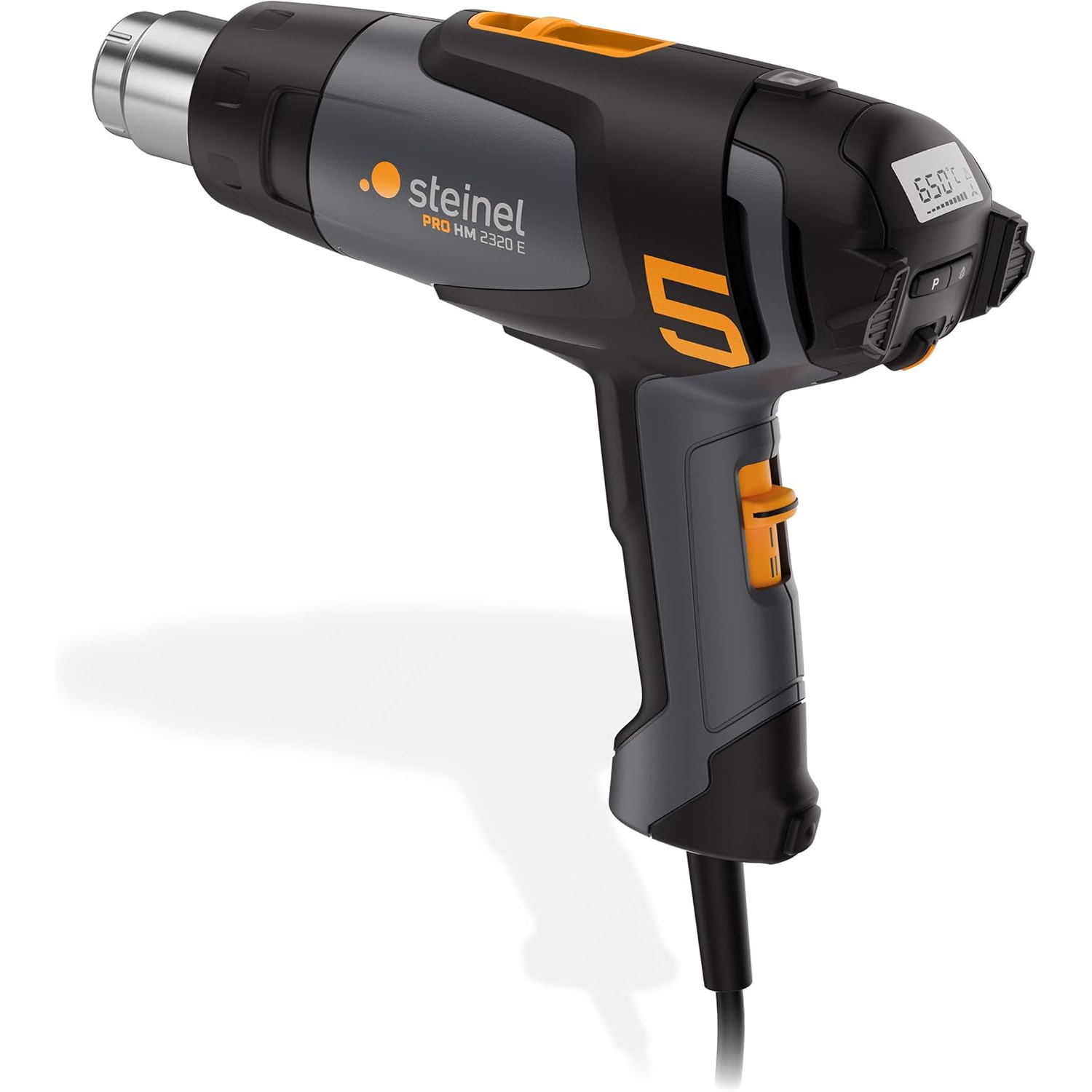
Heat guns are handheld power tools that can be used with multiple attachments, depending on the job, to direct heat as required for tasks such as thawing pipes, removing vinyl wraps and bending plastic.
Heat guns are popular as DIY tools, but are also used professionally by car repair technicians for removing decals, electricians for heat shrinking cables and in electronics for desoldering components.
Frequently Asked Questions about Heat Guns & Accessories
What are the common uses of a heat gun?
The heat that a heat gun generates makes it an extremely versatile power tool that can be used for a wide range of tasks, such as -
Paint removal.
Shrink wrapping.
Thawing frozen pipes.
Softening plastics, so that they can be bent or shaped.
Removing adhesives and decals.
Loosening tight or rusted fasteners.
Automotive detailing, such as applying car wraps.
How do I choose the right heat gun nozzle for a project?
Choosing a heat gun nozzle depends on how the operator wants to control and direct heat. Below are some of the most popular nozzle types we sell -
Concentrator/reduction nozzle – focuses heat into a small and precise area. This type of nozzle is ideal for tasks such as removing paint in tight spots or loosening bolts.
Flat/wide-slot nozzle – spreads heat over a wider surface, making it perfect for paint stripping, vinyl wrapping or drying materials.
Reflector nozzle – wraps heat around a surface and is commonly used for shrinking heat-shrink tubing or to heat up frozen pipes evenly.
Glass protection nozzle – deflects heat away from sensitive areas (like glass), making it useful when removing paint from window frames.
As a rule of thumb, use wide nozzles for larger surface areas or when faster coverage is needed, and narrower nozzles when the heat work is detailed and needs to be accurate.
Can a hair dryer replace a heat gun for certain tasks?
Heat guns output much higher levels of heat than hair dryers, with some at over 600°C, whereas hair dryers are typically around 60°C and have a wider spread of heat. This means a hair dryer could be used for some very low heat tasks, such as drying surfaces or speeding up the drying of adhesive, however, they are not powerful enough for tasks such as paint removal, shrinking heat-shrink tubing or thawing frozen pipes.
What safety precautions should I follow when using a heat gun?
Taking health and safety seriously is essential when using a heat gun, due to the high levels of heat that can be generated, which can cause burns, material damage and even fire. The following are a few general rules to follow when using a heat gun -
Wearing heat-resistant gloves is highly recommended because the nozzle can reach over 600°C and will certainly burn the operator if it is touched without suitable protection.
Ensure the heat gun is always moving and never set for longer than a few seconds in the exact same spot. This is because the hot air will scorch surfaces and potentially create a fire hazard.
Use the heat gun in a well-ventilated area. Heating paint, plastic and adhesives can release harmful fumes that need extracting from the work environment.
Never use a heat gun on flammable materials such as paper, or near fuel sources such as gas or petrol.
When the operator has finished using the heat gun, ensure it is placed on a heat-resistant surface to ensure it doesn't burn anything.
Can a heat gun be used for soldering or desoldering electronics?
Yes, a heat gun with adjustable temperature settings can be quite useful for desoldering, especially on surface-mount components (SMDs), because the hot air can heat up multiple solder joints at the same time. However, for soldering, heat guns are far less accurate than soldering irons, with the wider spread of heat potentially being able to damage circuit boards and nearby components, which is why we always recommend using proper soldering tools when soldering for enhanced accuracy and heat control.
What temperature range do most heat guns offer?
Most heat guns feature adjustable temperatures ranging from around 100°C to over 600°C, allowing flexibility for both delicate and heavy-duty applications.
However, temperature isn't the only variable, with airflow also affecting how the heat is applied. Heat guns with higher airflow enable more heat to be pushed across the surface, allowing heat to be applied more evenly and quickly, whereas heat guns with lower airflow are more suited to jobs that require precision, because the heat will be more concentrated.
Is a dual-temperature heat gun worth considering?
Dual-temperature heat guns (like this one from Steinel) are ideal for operators needing both low and high heat settings, which can be quickly changed between, making dual-temperature heat guns ideal for DIYers, as they are a low-fuss power tool with minimal buttons or controls to worry about. For example, the heat gun could be used on its low setting, which could be around 300°C and be used for drying material or loosening adhesive, but then on its high setting, which could be around 500°C, the heat gun could then be used for paint stripping or loosening bolts.
Why is wattage important on a heat gun?
Wattage is important because it indicates how much power the heat gun can generate and sustain. Heat guns with higher wattage can -
Heat up faster than heat guns with a lower value.
Reach and maintain higher temperatures.
Handle heavy-duty tasks where they are in use for longer, more easily.
Can heat guns be used in industrial or hazardous environments?
Yes, heat guns can be used in industrial settings, but their use in hazardous and flammable environments is highly restricted. This is because of the extreme heat they can create (up to 600°C+), which can ignite flammable atmospheres and produce hot surfaces that could also act as an ignition source.
If the operator requires a heat gun for a hazardous or flammable environment then they will need an ATEX heat gun, which can only reach much lower temperatures (T6 temperature rating at most) and reduces risk significantly in flammable settings. They also have explosion-proof housing, to ensure a spark or explosion inside the tool doesn't reach the outside environment.
Learn the top 5 tips for using a heat gun safely, from choosing the right tool to providing a well-ventilated workspace and wearing proper safety gear.
Discover everything about heat guns: types, features, uses, safety tips, and maintenance in our comprehensive guide. Perfect for professionals and DIY enthusiasts.
Discover 9 ways to use a heat gun safely and effectively – from stripping paint to thawing pipes – with tips, safety advice, and product insights from Heamar.